The ABC of a design brief
The success of a design project doesn’t rely solely on good design — it also depends on a well-thought-out brief. The clearer the goals, expectations, and inputs are agreed upon from the start, the smoother and more effective the entire collaboration will be.
A well-prepared brief helps the designer understand the core of the problem and deliver solutions that meet the set expectations. From the client’s perspective, it saves time, ensures better engagement throughout the process, and is often more cost-effective too.
Mindset first — why do you actually need design?
Before you dive into the details of what you want, take a moment to ask yourself: Why? What’s the real reason you’re seeking a design solution? Is it to boost sales? To refresh your brand because your product range has changed? Maybe you’re launching a new business model, need to improve your website’s usability, or simply want to communicate your values more clearly?
Whatever it is, try to define the core of your need or challenge as clearly as possible. It doesn’t have to be perfect — but putting it into words helps both you and the designer. It gives the project direction and creates a shared understanding from the very beginning. Sometimes, writing it down is the first step to seeing the bigger picture yourself.
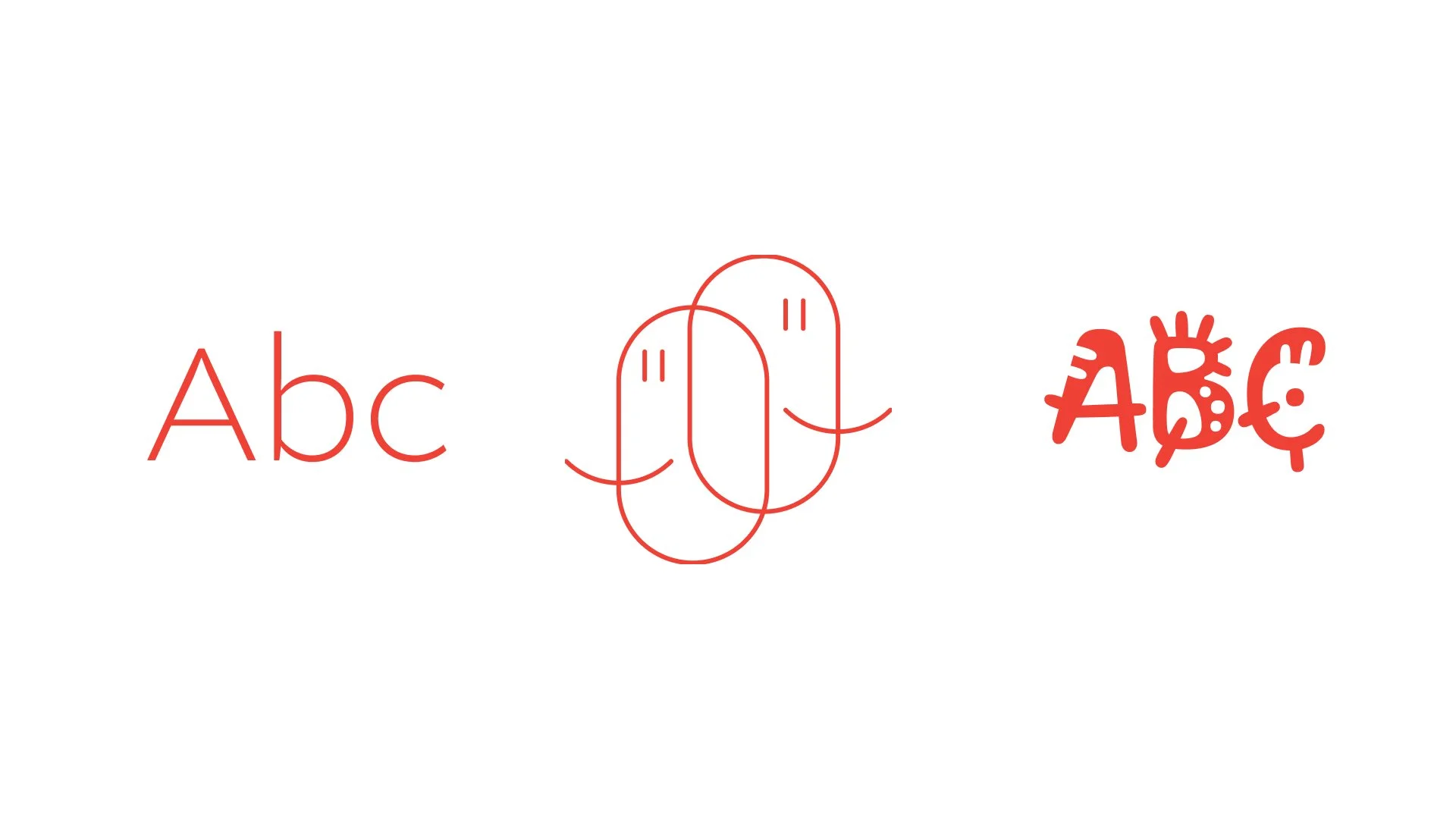
Mindset of a designer and “normal people” while thinking about creating something exquisite.
Click through the topics to see how different sections of design tasks may vary:
-
If you’re planning to commission a new or refreshed visual identity — whether it’s a logo, complete CVI, or broader branding — here are some essential questions and inputs that help the designer do their job well:
Brief introduction to your company or organisation
Who are you, what do you do, and why does it matter?
Market position
Who are your competitors? Who do you want to stand out to?
Brand values and tone of voice
Should the identity feel serious and professional, or would you prefer something more playful and friendly? Do you have a clear stylistic preference, or are you open to the designer’s creative interpretation?
If you’re asking for a concept or vision, keep in mind: developing one is part of the work. Even if the proposed vision doesn’t fully match your expectations, it still represents completed creative work. That’s why it’s smart to choose a creative partner whose past work and design language you already trust.
Existing branding
Do you have an earlier logo, colour palette, fonts, or other visual materials? Should anything be preserved or referenced? What’s the main reason for the change?
Where and how will the identity be used?
A logo and CVI must work across different formats — from print and web to social media — each with its own requirements for flexibility. If you plan to use your identity on physical products, consider that colour rendering and production methods can differ from standard digital and print media.
-
When it comes to web projects, the brief becomes especially important — not only for design purposes but also to ensure technical development runs smoothly. A good brief helps the designer and developer get a clear picture of your goals and expectations.
Purpose of the website
Is it primarily for sales, sharing information, showcasing a portfolio, or running a campaign?
Target audience
Who will be visiting the site and what are their main needs?
Content availability
Do you already have the texts, images, videos, or will you need help with content creation?
Structure and key pages
What sections do you need? (e.g. “About”, “Services”, “Contact”, etc.)
Technical expectations
Do you prefer WordPress, Voog, or another platform? Do you or your team have prior experience managing it?
What kind of functionality is required based on your structure and goals? For example:
Will the site include e-commerce?
What kind of payment and shipping modules should be integrated?
Are there warehouse or POS systems that need to be connected?
It’s also important to know the scale — how many products or categories will the site have, and who will manage the entries and updates?
Preferred additional features
Such as contact forms, a blog, multilingual support, newsletter sign-ups, etc.
Inspiration
Are there any websites you like in terms of style, layout, or content? Sharing references can significantly speed up the design direction process.
-
For a designer, it’s essential to understand how the packaging aligns with your overall brand communication. If your website, advertising, and print materials speak the same visual and verbal language, your packaging should support and enhance that story — whether it’s clean Nordic minimalism, a playful and bold tone, or a sense of high-end technological reliability.
When preparing a packaging brief, consider the following:
Packaging type
Is the packaging enclosing the product or simply accompanying it (e.g. sleeve, label, box)? What material is it intended for — cardboard, plastic, foil, textile, or something else?
Environmental exposure
Will the packaging be exposed to moisture, dirt, temperature changes, or other environmental factors?
Production specifics
How will the packaging be produced?
Will it require custom dielines or cutting forms?
Will it be printed digitally or with spot colours?
Are there any special finishes needed — such as spot varnish, die-cut windows, embossing, foil stamping, or other tactile effects?
The more detailed the brief, the smoother the collaboration — and the more likely it is the packaging will truly serve both form and function.
-
When ordering printed materials, both visual design and technical feasibility must go hand in hand. A clear brief helps ensure the final result matches expectations and functions as intended. Here are some essential points to cover:
What kind of print piece is needed?
Annual report, brochure, book, magazine, business card — each format has its own design and production requirements.
Content readiness
Are the texts, images, and possible illustrations already available? Do they need editing, retouching, licensing, or professional photography?
Visual style
Do you have an existing brand guide, or should a new visual direction be created? What overall mood or tone are you aiming for — minimalist, content-rich, bold, illustrative?
Print specifications
What paper type and finish are preferred — matte or glossy? Is it a softcover or hardcover book? What is the intended print quantity and page count?
For larger publications (e.g. books sold via Amazon), consider the weight and thickness of the paper to avoid exceeding shipping cost thresholds.
Also, if the material will be published digitally (PDF, flipbook, or online viewer), this should be taken into account already during layout planning.
References and inspiration
Are there examples of publications or styles you like and would like to use as a benchmark?
-
When planning a campaign, it’s crucial to know what you want to say and who you want to reach. A focused brief helps ensure all communication efforts work together effectively. Key elements to include:
Campaign objective
Is the goal to raise awareness, drive sales, promote an event, or shape brand perception?
Messages and copy
Are the core messages and texts ready? Do they need to be written or refined?
Visuals and imagery
Are visuals already available, or will they need to be purchased or photographed? Who is responsible for producing them?
Channels and formats
Will the campaign run in print, digital, outdoor, or social media? List any required formats, dimensions, and technical specs — and don’t forget the deadlines.
Timeline
When does the campaign start and end? Even a simple media schedule helps — for example, how frequently do you plan to publish campaign content?
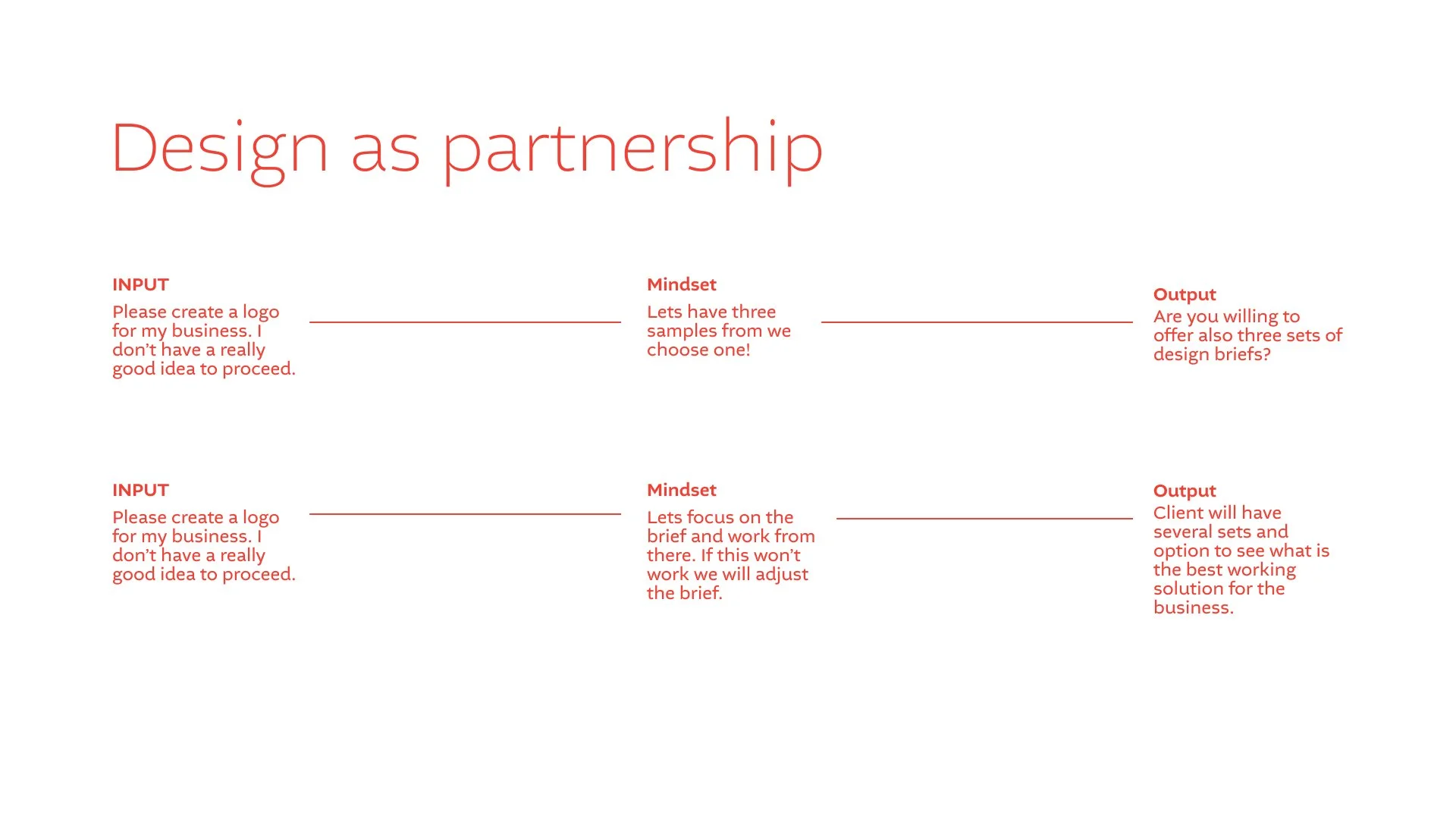
Get to know your partner, how they work and deliver things, this needs to be happy partnership for both sides, but not all relationships work.
A well-prepared brief is an investment — not just an extra chore. It gives the designer the tools to create exactly the solution you need — and often even more. The better you’re able to express your ideas and expectations, the smoother and faster the project will move forward.
We usually price our work by the hour, which places more weight on proper preparation — but in our experience, the most enjoyable and effective projects are the ones where the client is actively involved. After all, it’s your money that’s being spent to access our know-how. Also, get to know your partner, not always all relationships work and that doesn’t mean one or other side is bad. Businesses do things differently, so the ethics, services, pricing and methods cab also be different
If you need help and don’t know where to begin — write to us. A good brief is often born through collaboration, and we’re good at asking the right questions :)